Flat Roofing
Flat Roofing in Toronto & the GTA
Flat and low-slope roofs depend on how water moves across the surface, where it drains, and how the roof details are handled at seams, edges and penetrations.
Annex Roofing works on flat roofs across Toronto and the GTA. The appropriate scope for a flat roof depends on what is found, and can be discussed as part of the estimate process.
Not sure whether what you are seeing is a localized issue or something wider? That is one of the questions an estimate can help answer.
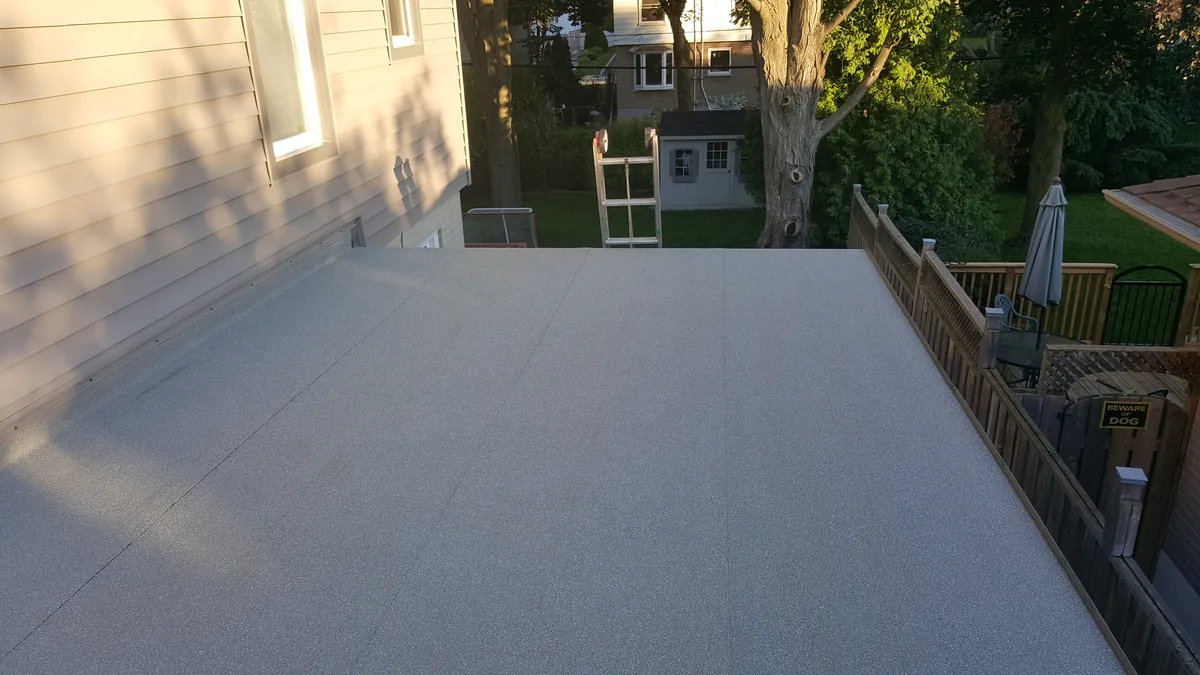
What Are You Seeing on the Flat Roof?
What you see on the surface can indicate where to investigate, but the visible symptom does not always identify the full cause. These are the things homeowners and property owners most often describe when they call.
Not sure what you are looking at?
You do not need to diagnose it yourself. Describe what you can see and where the property is.
Get a Free EstimateDifferent System, Different Thinking
Why Flat Roofs Need a Different Approach
A steep-slope shingle roof sheds water quickly by geometry alone. A flat or low-slope roof does not have that advantage, so the way water travels — and where it is meant to leave the roof — becomes central to how the roof is assessed.
That is why a flat roof is rarely judged by its surface alone.
Compare with shingle roofingWater, Drainage & Details
Water Has to Go Somewhere
On a flat roof, water leaves by design rather than by gravity alone. Following that route — surface, direction, outlet, edge — is a useful way to think about where problems tend to show up. This is general background, not a description of any one roof.
Step 01
The roof surface
The visible roofing surface is where water first sits and travels. Its condition is the starting point of any review.
Step 02
Direction of flow
Water follows the shape of the roof. Where it gathers and how it moves says a lot about the roof's behaviour.
Step 03
Drains, scuppers and outlets
Where applicable, water leaves through defined outlets. Their position and condition are part of the picture.
Step 04
Edges and parapets
The perimeter is where the roof surface terminates. Where a parapet is present, the detail there matters.
Step 05
Penetrations
Vents, pipes and curbs interrupt the surface. Each one has to be sealed and detailed on its own terms.
Step 06
Transitions
Where a flat area meets a wall, another roof plane or a different material, the junction needs deliberate treatment.
Step 07
Flashing details
Flashings close the gaps the roof surface cannot close by itself. They are worth inspecting directly.
Step 08
What sits beneath
Some of what affects a flat roof is not visible from above. Where accessible, it is considered as part of the review.
Scope
Does a Flat Roof Problem Mean the Whole Roof Needs Work?
Not necessarily.
A visible issue in one area does not automatically mean the entire roof has to be addressed. What the right scope looks like can depend on the visible condition of the roof and the requirements of the project.
- How extensive the visible deterioration actually is
- The condition of the roof surrounding the affected area
- Where on the roof the issue is located
- The condition around seams and penetrations
- How the roof drains and how water behaves on it
- The condition of the roofing assembly where it is visible
- Whether the damage appears isolated or more widespread
- What you want the roof to do over the next several years
The Assembly
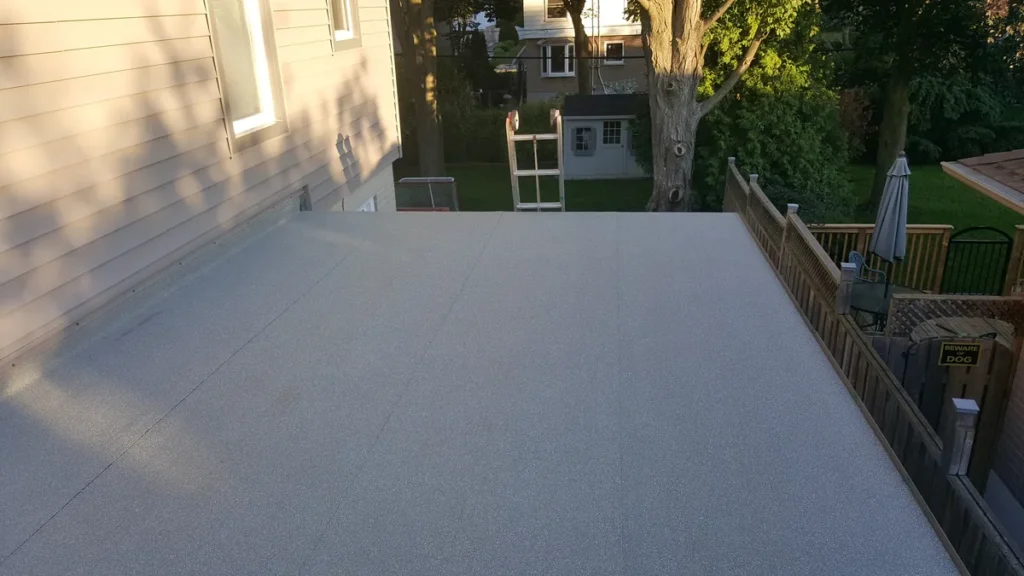
A Flat Roof Is More Than the Surface You See
A flat roofing assembly can include several layers and details that work together. Depending on the property and the roofing system already in place, some of these will be visible during a review and some will not.
This is a general description of how flat roofs are commonly put together — not a specification of a particular installation. What applies to a particular roof depends on the property and the roofing system already in place.
The visible roofing surface
the layer you can see and the one most people mean when they say “the roof”.
Supporting layers
depending on the property and roofing system, material can sit between the surface and the structure.
The roof deck
the structural surface the assembly is built on.
Transitions
junctions with walls, adjoining roof planes or other materials.
Flashings
the details that close junctions and terminations.
Penetrations
anything passing through the roof surface.
Drainage points
where water is intended to leave, where applicable.
Edges and parapet conditions
where present, part of how the roof is finished and protected.
How the Work Runs
How a Flat Roofing Project Usually Goes
Every roof is different, so the sequence below describes the general shape of a project rather than a fixed procedure. What applies depends on the property and the scope of the project.
Existing roof reviewed
The existing roof can be reviewed where access allows, rather than assessed from a description alone.
Visible conditions considered
Surface condition, seams, edges, penetrations and drainage points can be taken into account where they are visible.
Appropriate scope discussed
What is found can be discussed along with the options, so the scope can be considered with the relevant information available.
Agreed areas addressed
Work is carried out on the areas included in the agreed scope for the project.
Roofing details completed
Edges, transitions, penetrations and flashing details are completed as required by the agreed scope.
Finished work reviewed
The finished work can be reviewed in relation to the agreed scope.
Localized Work or a Larger Flat-Roof Project?
Both are normal outcomes. Which one applies can depend on the visible condition of the roof and the requirements of the project.
Localized work may be considered when
- The issue appears isolated to a defined area
- The surrounding roof condition supports a limited scope
- Specific details — a seam, an edge, a penetration — can be addressed directly
- The rest of the roof is not raising the same concerns
A broader scope may need to be considered when
- Deterioration is more extensive than a single area
- Multiple areas of the roof are involved
- The existing roof condition creates broader concerns
- Repeated localized work would not address what is actually happening
If the work turns out to be localized, roof repair may be the right route. Learn about roof repair
Cost
What Affects the Cost of Flat Roofing?
We do not publish a square-foot rate, because a flat roof price is driven by the specifics of the roof rather than by its size alone. These are the variables that move the number.
- Roof size
- Roof geometry
- Access to the roof
- Existing roof condition
- Amount of work required
- Number of penetrations
- Roof edges and transitions
- Drainage details
- Supporting layers where work exposes them
- Removal and disposal where applicable
- Material selection once confirmed
Working With Annex Roofing
What You Can Expect Before You Commit
A flat roof is difficult to judge from a description alone, which is why this page does not attempt to diagnose one. Here is what it does show, and what it deliberately leaves to the estimate.
FAQ
Flat Roofing Questions
Can a flat roof be repaired?
In many cases, yes — but it depends on what is found. If the issue appears isolated and the surrounding roof condition supports a limited scope, localized work may be appropriate. Where deterioration is more extensive or multiple areas are involved, a broader scope may need to be considered. That can depend on the visible condition of the roof and the requirements of the project.
Does standing water always mean the roof needs to be replaced?
No. Water sitting on a flat roof can relate to the shape of the roof, how it drains, or the condition of a specific area. It is a reason to have the roof looked at, not proof on its own that the roof has failed. What it means in your case depends on the roof.
What causes problems around flat-roof penetrations?
Penetrations — vents, pipes, curbs and similar — interrupt the continuous roof surface, so each one relies on how it has been sealed and detailed. Because these are individual details rather than open field, they are always worth inspecting directly rather than assuming from ground level.
How do I know whether the issue is localized?
You usually cannot tell from inside the building, and often not from a single photo. An interior water sign shows where water arrived, not where it entered. Determining whether the issue is confined to one area normally requires looking at the roof itself, including seams, edges, penetrations and how the roof drains.
Can you work on an existing flat roof?
Yes. Flat roofing work can involve existing roofs as well as broader roofing projects, depending on the property and the required scope. What can be done on an existing roof depends on its current condition, which needs to be considered before the appropriate scope can be determined.
What affects the cost of flat roofing?
Roof size and geometry, access, the condition of the existing roof, how much work is required, the number of penetrations, edges and transitions, drainage details, whether supporting layers are exposed during the work, removal and disposal where applicable, and material selection once confirmed. Because these vary between properties, cost is determined for the specific project rather than from a published rate.
Do you provide free estimates?
Yes. There is no charge for an estimate. Get in touch with what you are seeing and where the property is located, and we can take it from there.
What areas do you serve?
Toronto, North York, Etobicoke, Scarborough, York, East York, Vaughan, Richmond Hill, Markham, Mississauga, Brampton and Oakville.
Should I choose flat roofing or another roof system?
In most cases the roof structure already determines the answer — a low-slope roof calls for a flat roofing approach, and a steep-slope roof calls for shingles or metal. Where a property has both, each area is treated on its own terms. If you are weighing options, it is worth comparing shingle roofing and metal roofing as well.
Flat Roofing Service Areas
Annex Roofing serves Toronto and the surrounding GTA.
Next step
Need Help With a Flat Roof?
Tell Annex Roofing what you are seeing and where the property is located, and ask for a free estimate.